Skip to content

How to Learn a Foreign Language


Maya Benizri Krinsky

Monday, March 13, 2023
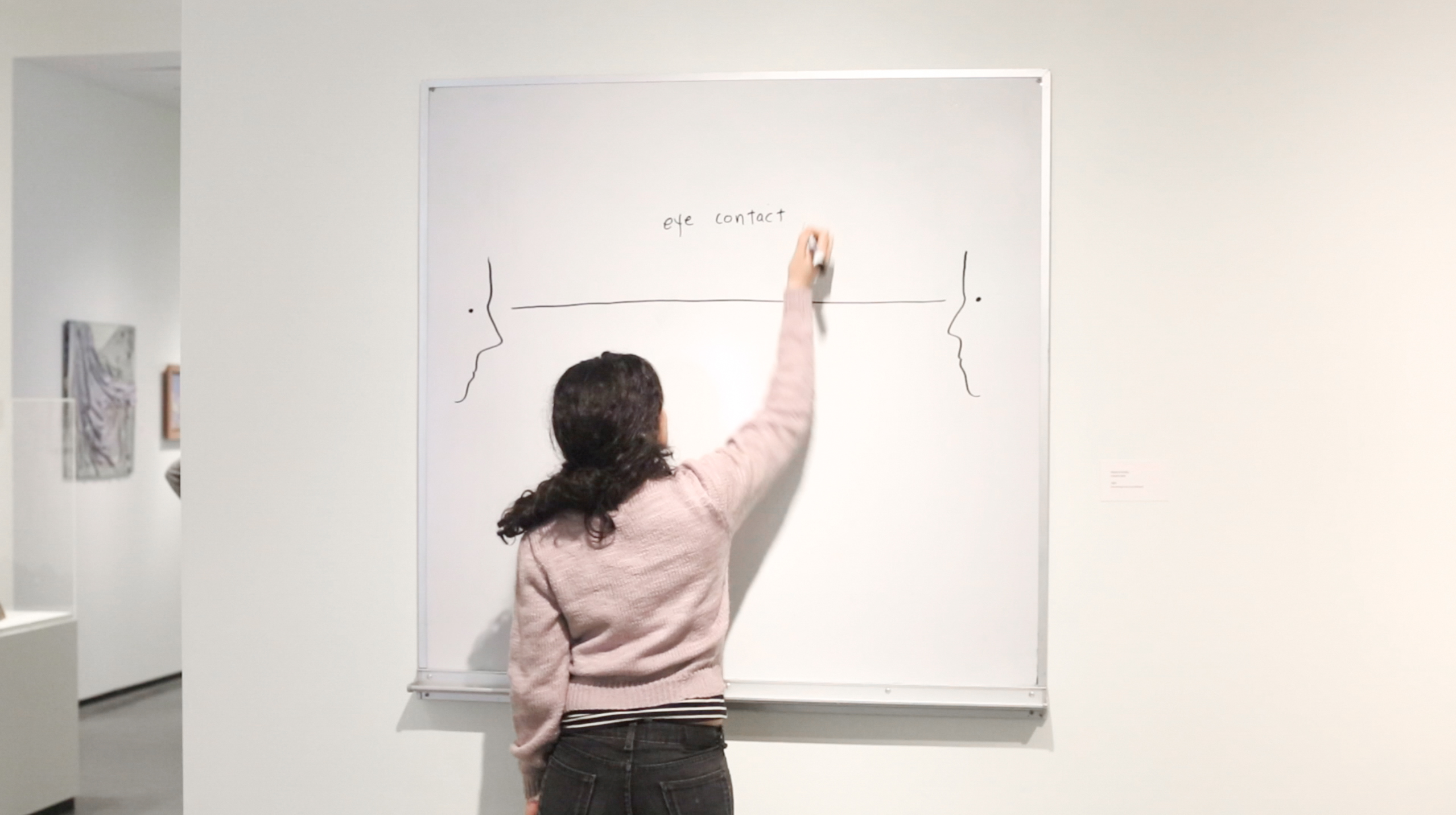
A person with dark hair, wearing a light pink sweater, draws on a whiteboard showing two face outlines with dots for eyes connected by a line labeled “eye contact.”

Maya Krinsky, 101, Live drawing performances, 2015 - 2018, Dry erase marker on whiteboard.

1. All languages are worth learning. All are beautiful and strange, orientation-altering at minimum. At maximum, they will send you in a new direction full-speed.

2. Learn a language for personal reasons: to expand yourself, face memory or fear, the present moment, the people nearby, your inner desire to leave, or your need to fully arrive. Learn a language for the here-and-now.

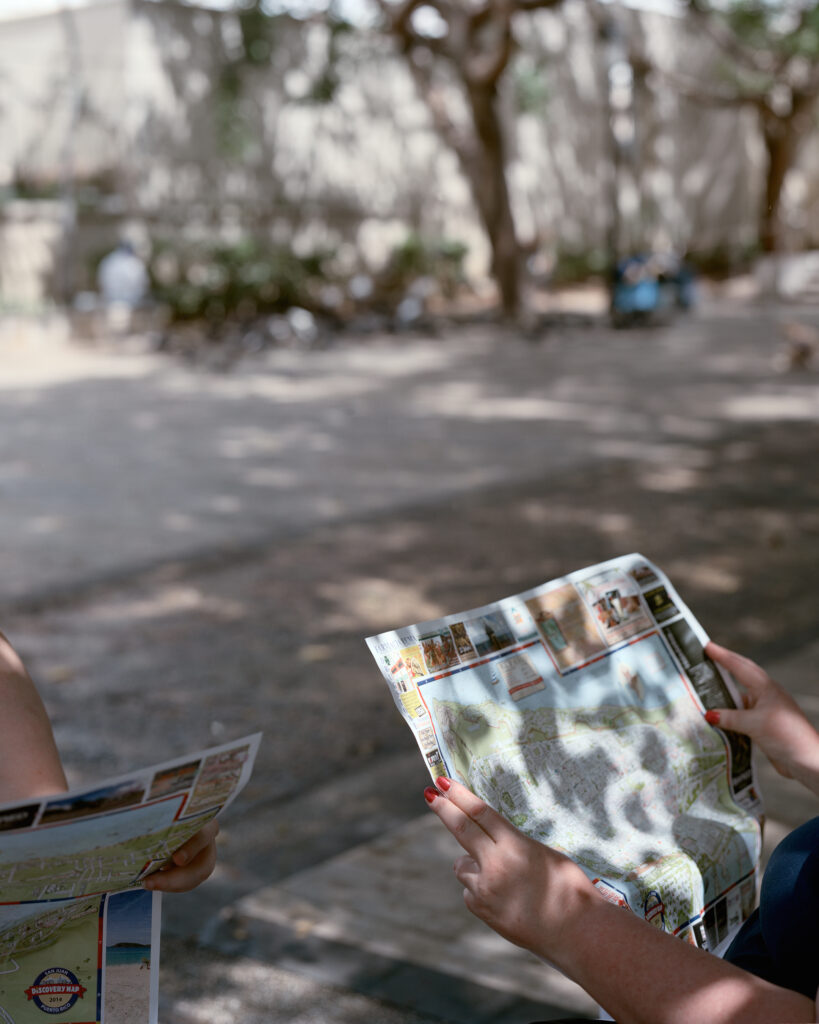
Two people holding folded maps outdoors, with sunlight casting dappled shadows on the maps and the ground. The background is blurred with trees and buildings.

Maya Krinsky, Non-Native Speaker, 2014. Inkjet print, 24 x 30 in.

3. Expect to never be finished. Words will always be missing. Resort to everything that helps: translating, gesturing, laughing, the shrug, the wink, the head shake, the wave, the guess. It will still be unfinished.

4. Expect to forget things in both the new language and your own. You’re digging up new verbal space, which tends to make a mess. Some of this mess is painful and the rest can be a wonderland.

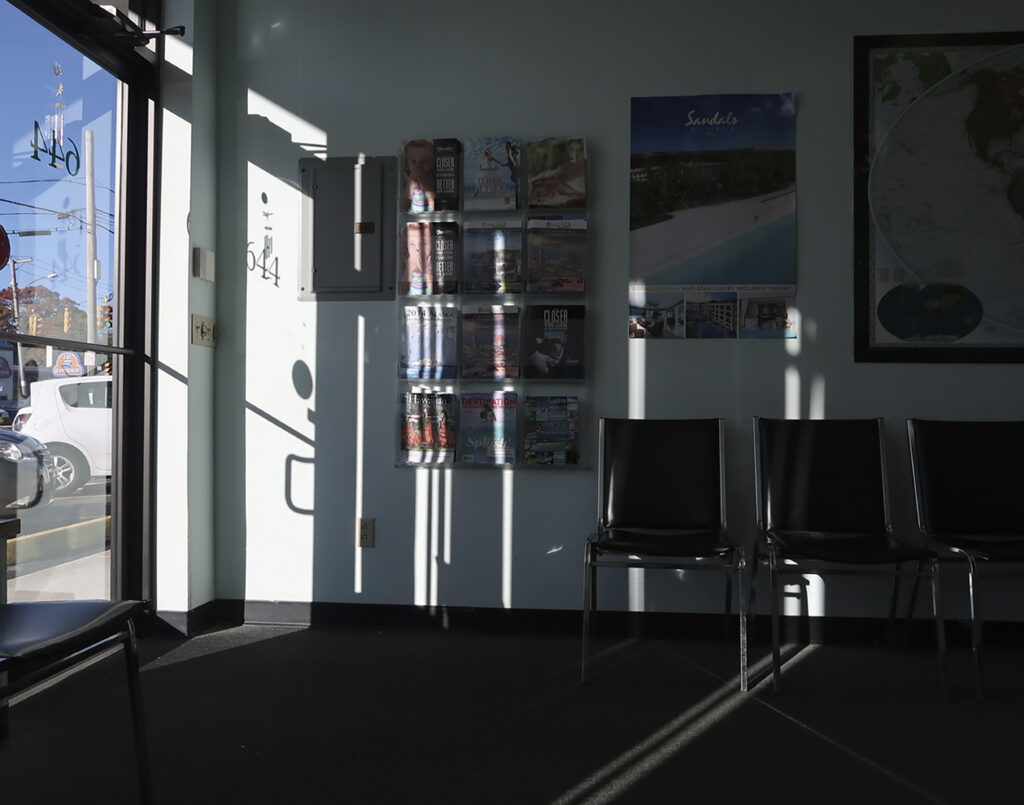
Sunlight streams through a glass door into a dark waiting room with chairs and travel brochures and posters on the wall.

Maya Krinsky, Ideal Abyss, 2017. Series documenting travel agency interiors. Inkjet prints, 6 x 8 in.

5. Start with experiences and people. Learn about film, art, history, the news. Surround yourself with reality not textbooks.

6. Write in a journal. Write honest messages to yourself. Exclude nothing from your beginner tongue. Write and speak of your life, your truths, your hopes and your regrets. Use your sentences to capture change in real time.

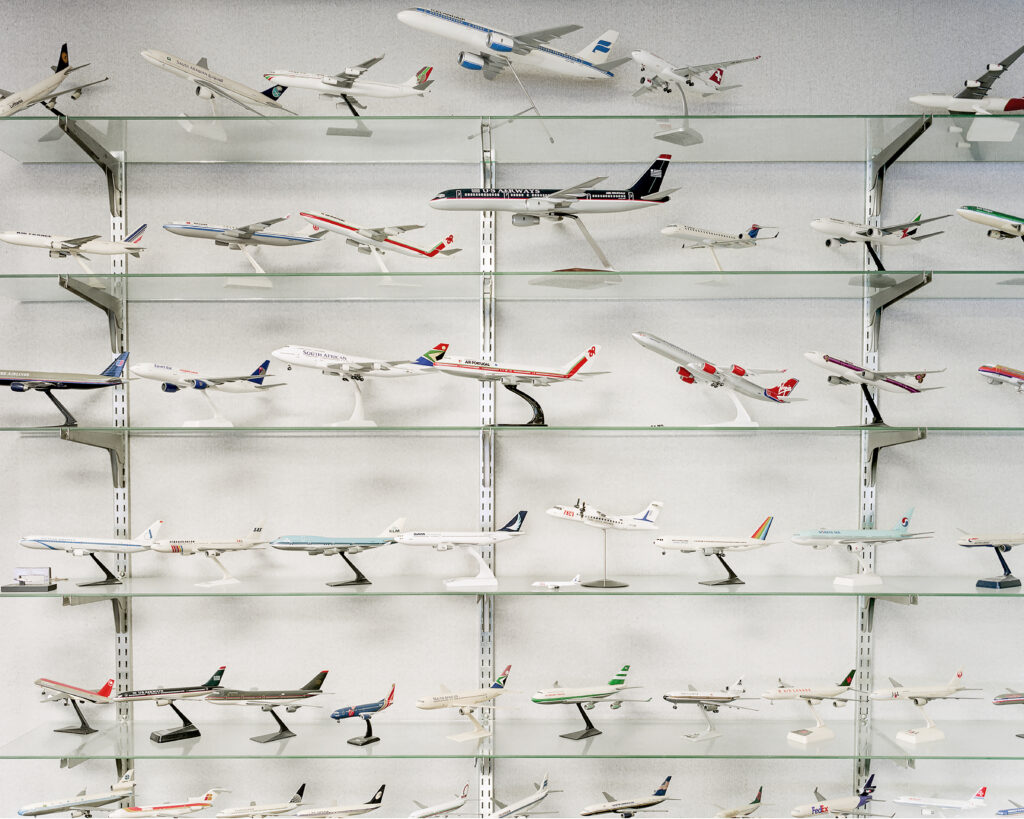
Rows of glass shelves display numerous model airplanes, representing different airlines.

Maya Krinsky, Ideal Abyss, 2017. Series documenting travel agency interiors. Inkjet prints, 6 x 8 in.

7. When traveling or out-of-place, find a spot to stay still and listen. Eavesdrop politely. Allow others to read your mind.

8. Enjoy trying together, the non-fluent conversation. The listener is more patient than you think, and if they aren’t, they will learn. See everyone else as a language learner too.

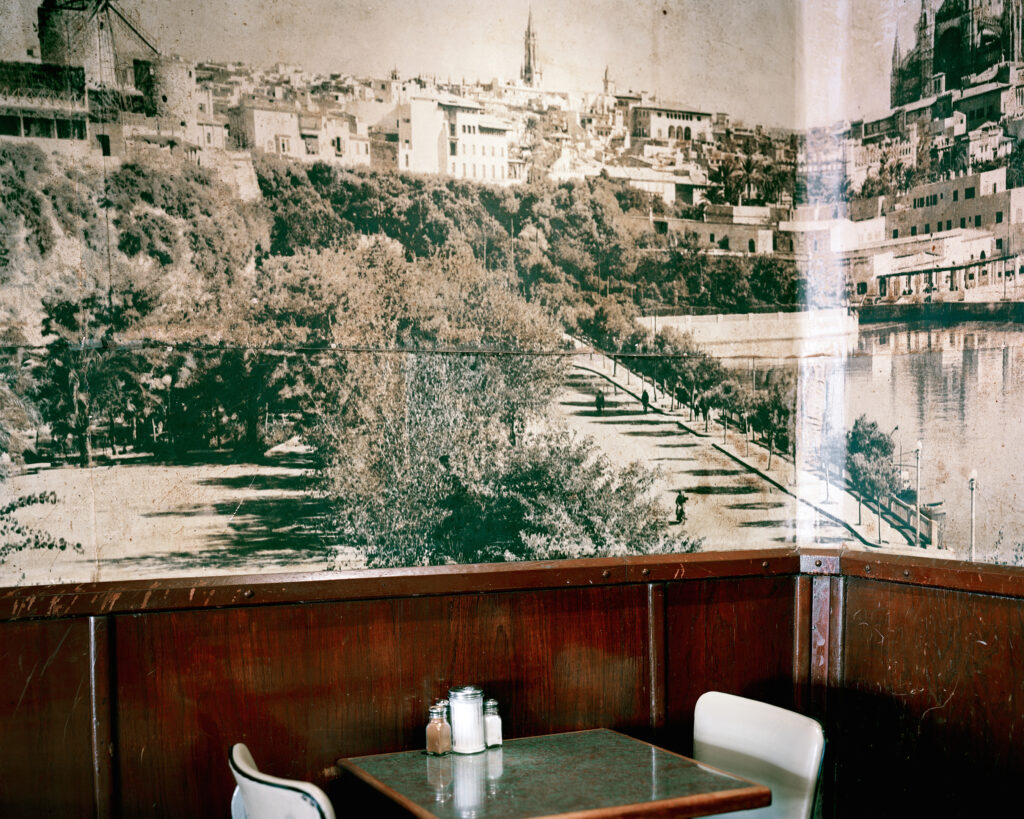
A small café corner with wooden walls, a table holding salt and pepper shakers, two white chairs, and a large old-looking photo of a city on the wall.

Maya Krinsky, Non-Native Speaker, 2014. Photographs from San Juan, Puerto Rico. Inkjet print, 24 x 30 in.

9. When you are the receiver, the host, conversing in your own language, be a silent teacher, a diplomat, an interpreter without expertise.

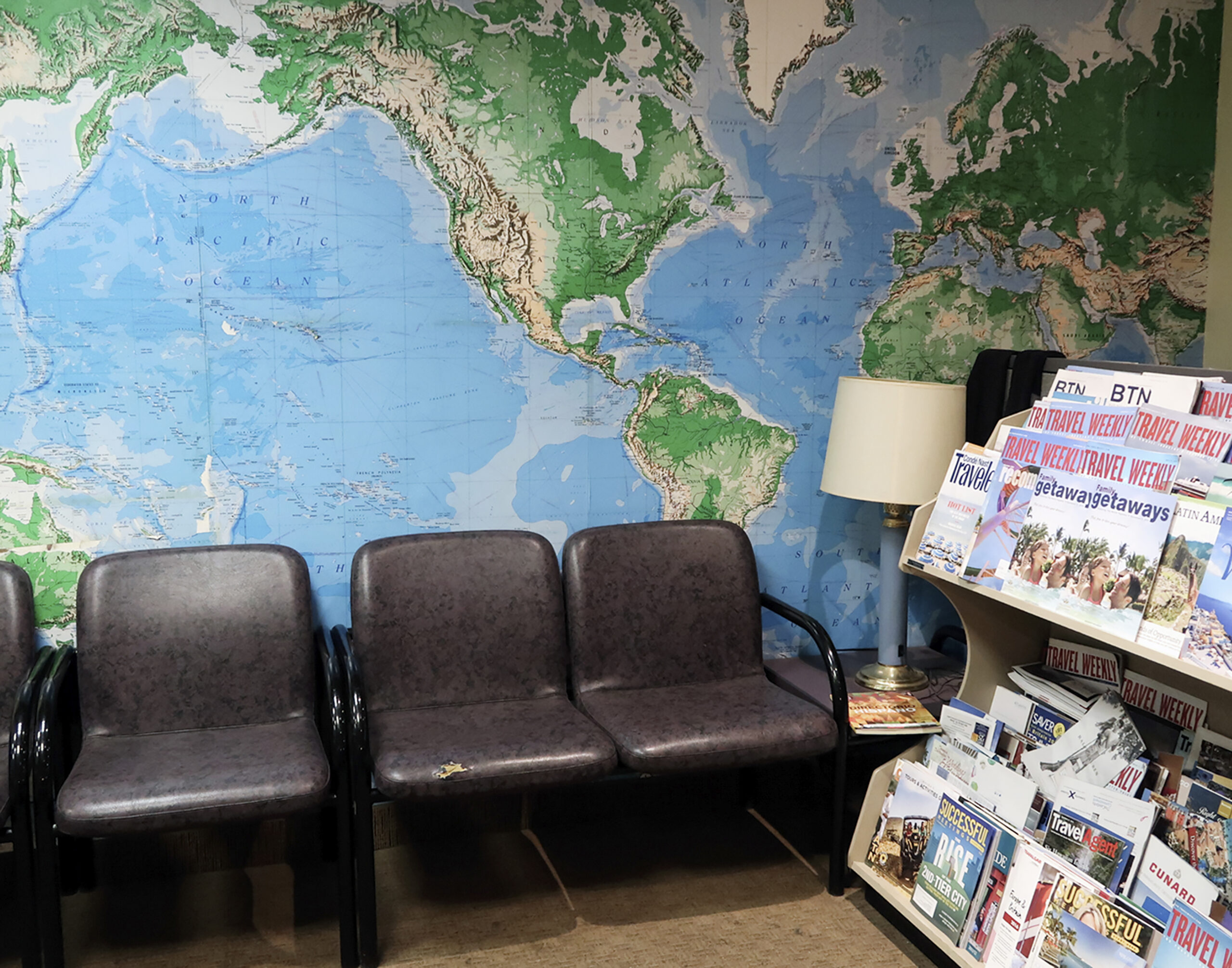
A waiting room with dark chairs, a lamp, and a stand of travel magazines, against a bright world map wallaper showing green land and blue oceans.

Maya Krinsky, Ideal Abyss, 2017. Series documenting travel agency interiors. Inkjet prints, 6 x 8 in.

10. Remember that all languages require the hospitality of listening, and that every language is foreign somewhere.

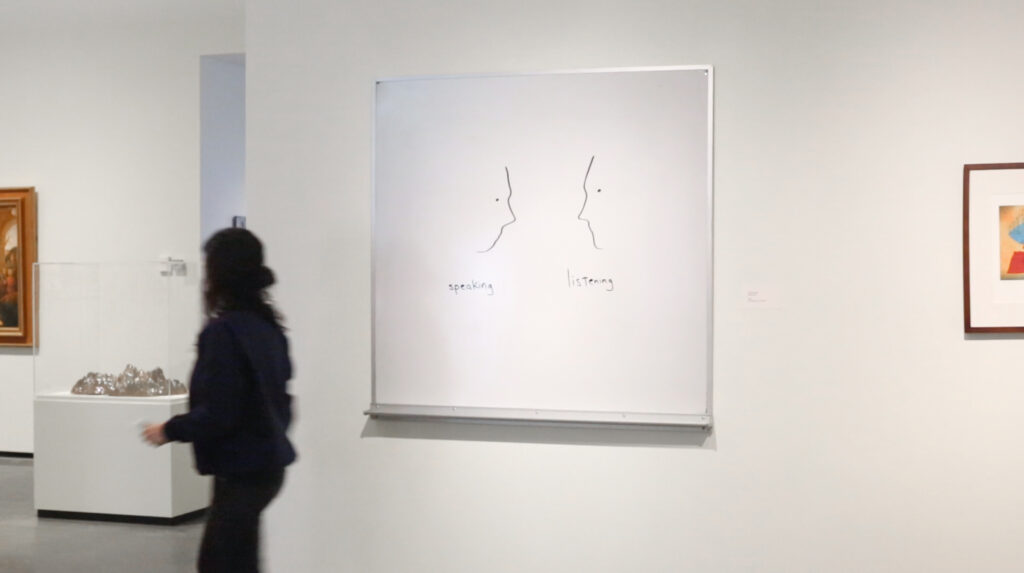
A woman walks past a drawing on a white wall showing two simple face outlines facing each other, one labeled Speaking and the other Listening.

Maya Krinsky, 101, Live drawing performances, 2015 - 2018, Dry erase marker on whiteboard.

Editor’s Note: After a number of conversations with the artist about place, translation, and language as portals, I selected these featured images to accompany her text. The images are from Maya Benizri Krinsky’s photography series Ideal Abyss, Non-Native Speaker, and her installation/performance series 101, each approaching travel and language learning from different vectors.

About Ideal Abyss: “Travel agents sell the dream of a perfect destination and experience. They usher clients across borders for tourism, while political and economic inequalities make it impossible for many global subjects to move freely, even to their own homelands.”

About Non-Native Speaker: “This series of photographs, video and writing documents my time spent in the landscape of Old San Juan, Puerto Rico, a complex intercultural American colonial territory, as someone who learned Spanish as a foreign language. The project emanates from a desire to reflect on the terms of my own multilingualism and the ambivalent identity of the so-called “non-native” speaker.”

About 101: “In this series of live drawing performances, I return to the site of an installed whiteboard to draw a new communication or travel diagram every day of the exhibition.”